Welcome to the KSR's Literary Universe
Route 1
Trees of South Division of WBG
Route 1 introduces visitors to a carefully curated selection of iconic trees that showcase the botanical, cultural, and aesthetic richness of Waghai Botanical Garden. Beginning near landmarks like The Garden Shop, Cactus House, and themed plots such as the Medicinal, Bamboo, and Tuber sections, this trail gently guides you from familiar avenue trees to rare and symbolic species. Along the way, you will encounter graceful False Ashok and towering Mahogany, the spreading canopy of the Rain Tree, the striking Cannon Ball Tree near the medicinal area, and useful species like Indian Cherry, Cashew, Wood Apple, and Spanish Cherry. Each station on this route has been chosen to highlight a different story—from shade and timber to medicine, mythology, and fruit—so that by the time you reach the endnote, you have walked through a living classroom of form, function, and folklore.
Introduction
Hello friends,
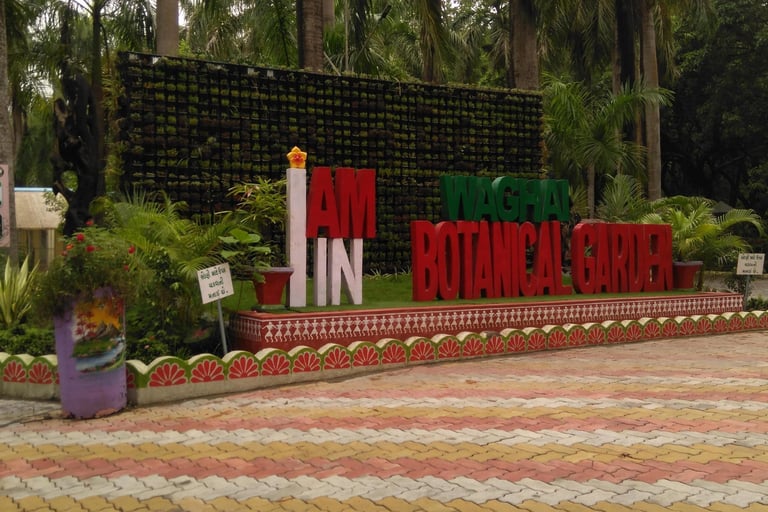
welcome to the Waghai Botanical Garden.
Established on 1st may, 1966 by then forest officers, Garden superintendent, scientists and scholars this is the largest garden in the Gujarat state.
Have you ever wondered how botanical gardens are different from other gardens?
Botanical gardens are different from other gardens as their primary concern is to have living repository of diverse types of plants, their conservation, promotion, awareness and site for training students, scholars, faculty foresters and even the common public, kin to know more about plants.
Generally, people see all the trees as if they are similar, but how they are different from each other and what their uses are, you get to know, see and understand only in the botanical garden.
India has a rich heritage of natural diversity.
India ranks fourth in Asia and tenth in the world amongst the top 17 mega-diverse countries in the world.
India harbours nearly 11% of the world’s floral diversity comprising over 17500 documented flowering plants.
Among which 6200 species are endemic, 7500 are medicinal plants and 246 are globally threatened species in only 2.4% of world’s land area.
India is home to four biodiversity hotspots-Andaman & Nicobar Islands, Eastern Himalaya, Indo- Burma region, and the Western Ghats.
The Dangs is extreme northern parts of Western Ghats in the Dangs district of Gujarat, and is known for the Dang (Bamboo) forests. Hence the importance of biogeographical study of India's natural heritage.
The first initiative to classify the forests of India was done by Champion in 1936 and revised by Seth in 1968.
Champion and Seth (1968) classified India's forests into six 'major groups ranging from tropical to alpine, 16 'groups' and more than 200 group categories.
The Waghai Botanical Garden is divided into various sub- section based on Champion and Seth Classification.
Presently Waghai Botanical Garden is represented by evergreen, semi-deciduous, deciduous, and thorn Forest. In addition to various forests types.
Botanical Garden is divided into various sub division such as Dang plot, Bamboo plot, Medicinal plant plot, Arogyavan and an area dedicated to tuber plot, cacti and orchids.
The various subdivision are spread in stretch of 7.5-kilometer-long roads interlinked by Harde Road, Rain Tree Road, Nilgiri, Borsali, Kothu Road, etc.
Not making you wait furthermore, let's move into a journey of overwhelming plants, let's get back to nature, love nature and know the hidden treasure of plant with the Trees of South Division of Waghai Botanical Garden
Station 00
Introduction
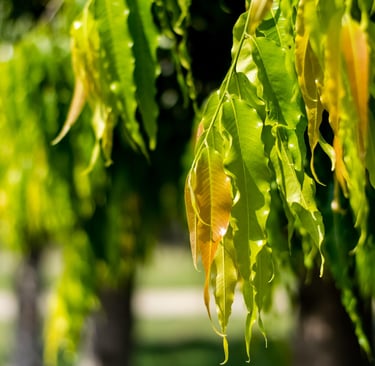
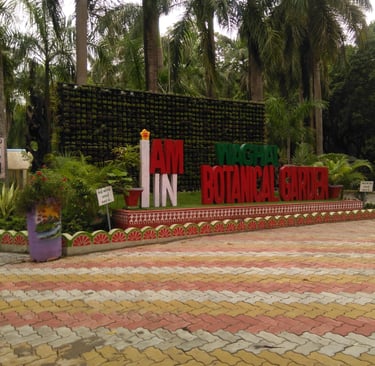
You are at the entrance of Waghai Botanical Garden and two rows of avenue trees with the sturdy straight trunks and shiny wavy green leaves giving standing ovation like soldiers. These are the trees are of Asopalav. Due to their featured trunk, they are used as masts in sailing ships. And therefore, known as Indian Mast Tree.
Their conical canopy like that of a pine tree is a house for bats, squirrels, insects, butterflies, and other animals. In India, they are used for decorating homes as an alternative to mango leaves. This tree is often misunderstood as Ashoka, which is mentioned in Ramayana as Ashok Vatika and hence also known as the False Ashok tree. The scientific name Polyalthia longifolia stands for a long-leaved tree.
Station 01
Asopalav
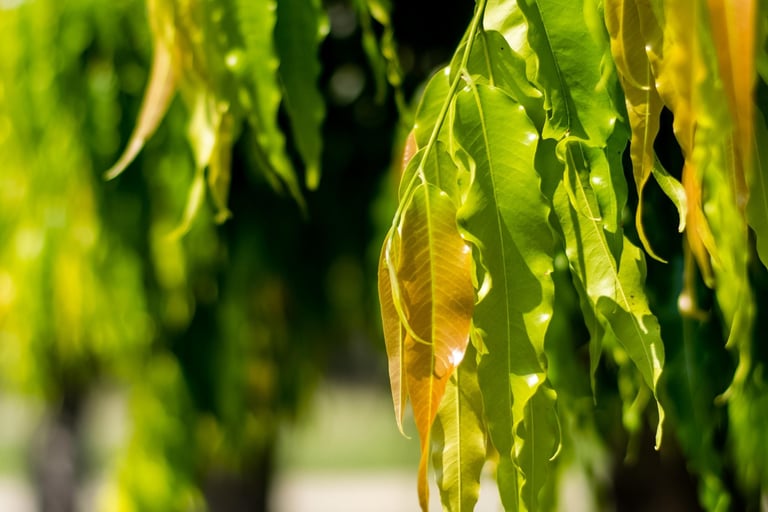
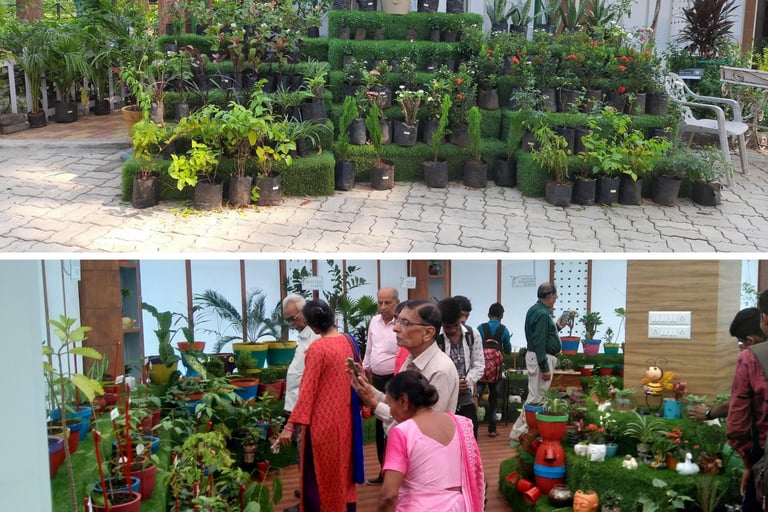
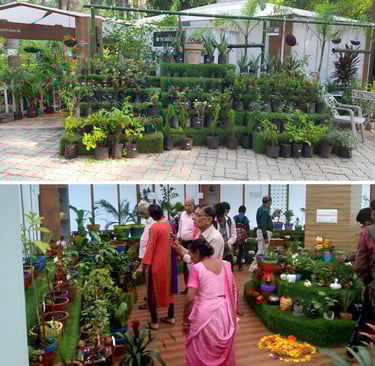
Do you know a plant whose leaf smells like Basmati Rice? And a plant whose leaf extracts solidify the water and a leaf which, after chewing, you will lose the sense of taste. If not, you can know about them here. A beautiful white hut in front of you is ‘The Garden Shop’. It was established in 2019 with the vision of providing medicinal plants with designer pots and gardening tools for visitors. Also, the seeds of plants collected from the Waghai Botanical Garden are also made available for sale. We recommend you to visit it once.
Station 02
The Garden Shop
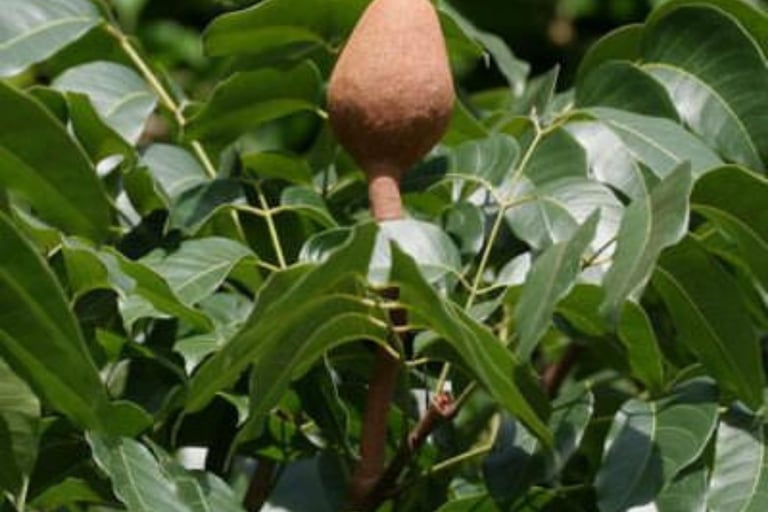
Next to the Garden Shop, there are six trees with dark reddish-brown trunk are standing in front of you. These trees are of Mahogany. This tree is native to South America and Mexico, from where it is introduced into Africa, Asia, and the Island of the Pacific Ocean. It was discovered in the 17th century and since then, it has been a favourite choice of cabinet makers. Its wood is resistant to salt water and hence was used in shipbuilding and now it is cultivated through the tropics and flourishes in drier climates such as that of India. The scientific name of this plant is Swietenia macrophylla. The fruit usually points upwards towards the sky and hence it is known as Sky fruit. The Crushed fruit shells are used as potting medium and bark gum is used for dyeing and tanning leather. The leaves of this tree are bitter as that of neem and used as headache and fever.
Station 03
Mahogany
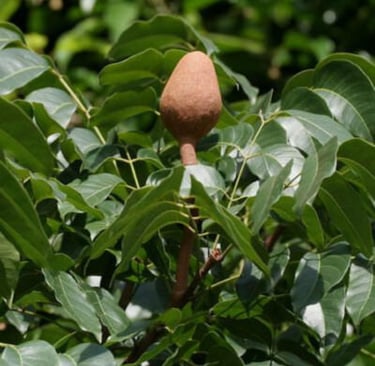
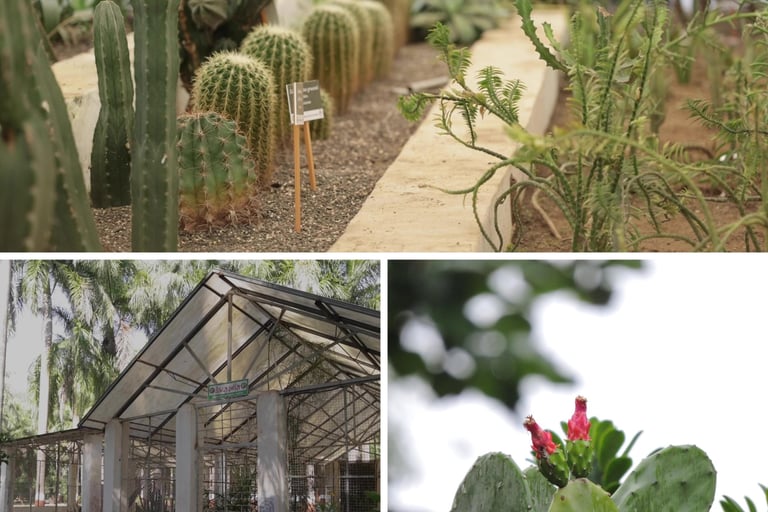
The Cactus house in the garden has more than one hundred cactus species. Cactus is the type of plant that grows in drier conditions. such as the desert. There are many people who are fond of keeping cacti on their desks as they are a sign of good fortune. One of the cacti which can be easily found is Opuntia. This cactus has thorns on its flat body. It bears a brilliant yellow flower and roundish pink-purplish fruits that has immino-modulating properties.
The library in the botanical garden consists the hundreds of books that contain floras, pictorial flora of WBG, books on forestry, flowering plants, horticulture, etc.
Taxonomy is the subject of systematics, where the nomenclature and classification of an organism are done on the basis of various aspects. This plot has various trees like Chandraphal, Kusum and Chukrasiya.
Station 04
Cactus House, Library and Taxonomy Plot
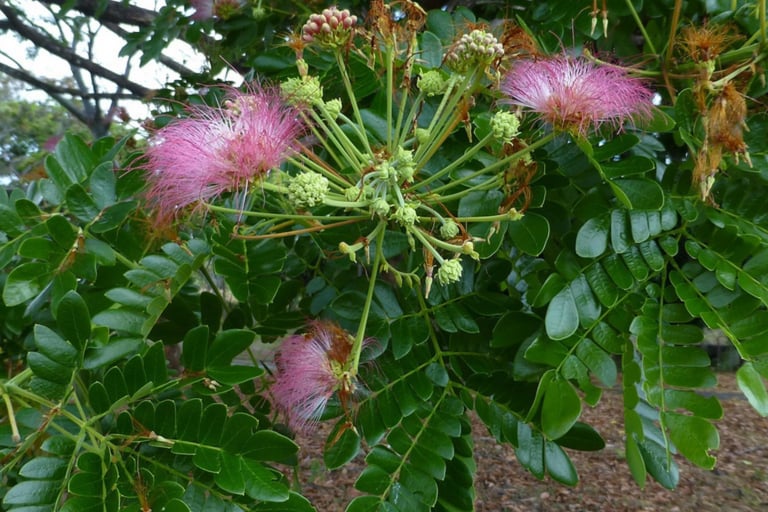
Are you feeling any water droplets falling upon you? if yes, then you are very closer to knowing this plant. This huge tree, that you are standing beneath, is known as Raintree. There are two reasons it is being called the Raintree. First, it performs guttation which is responsible for the removal of excess water through its leaves. Secondly, the leaves close at night, during the monsoon season, it allows the rain to fall on the grasses underneath it and making it greener than the surrounding ones.
This plant belongs to the same family as the Touch me not the plant. So, is it therefore closing its leaves? Does this plant close its leaves on touch? Well you need to find this on your own and don’t forget to taste the mature fruit, they are as sweet as Jaggery.
Station 05
Rain Tree
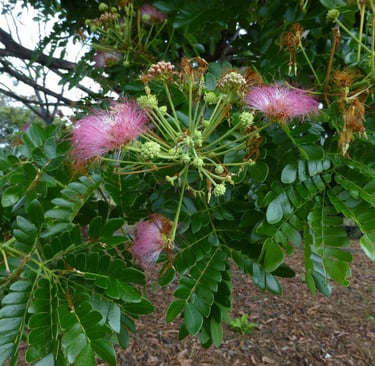
The next tree in our tour is Buddha Coconut. Can you guess why is it calling so? It is called so because it’s coconut-like fruit. Native to India, Bangladesh and Myanmar, it is found variously in South East Asia. This deciduous tree with narrow conical crown flowers and fruits in the months of March to June. The tree is harvested from the wild for local uses such as Food, Medicine, and for oil and wood. This tree is a heritage tree of Singapore.
In a variety diversifolia, no two of its leaves are the same, and hence it is also known as the Mad Tree. The wood is light and coarsely fibrous hence used for light packing cases like tea boxes, and matchboxes. The seeds are roasted and eaten in North-East India.
Station 06
Buddha Coconut
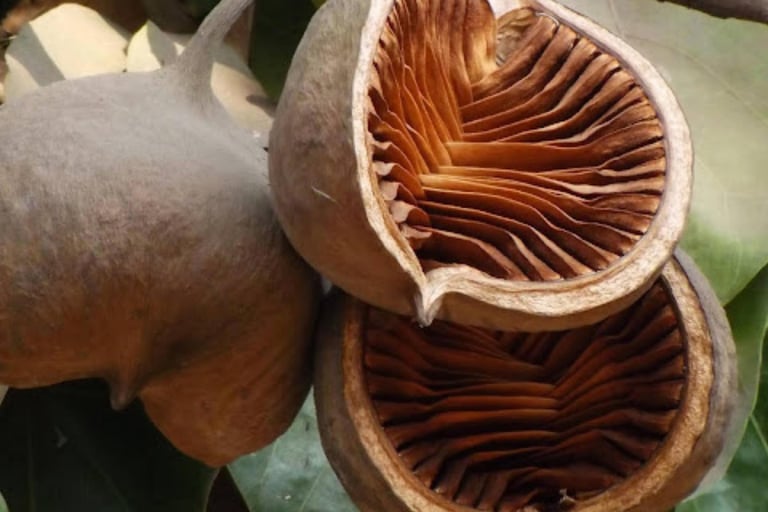
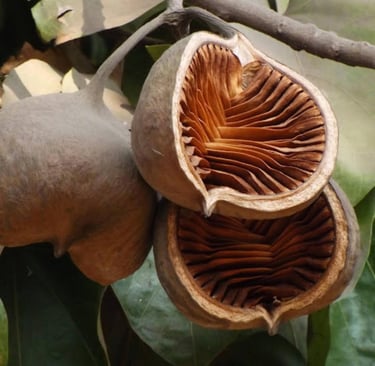
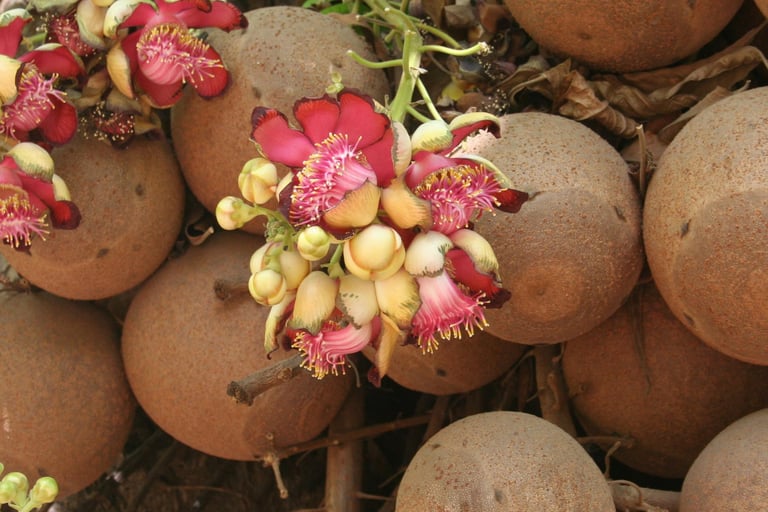
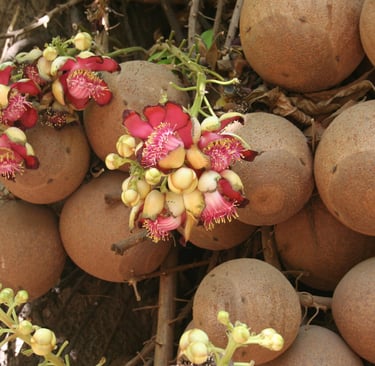
The fissured brown bark, bright green, and leathery leaves and the trunk from which thick cords are emerging with the large spherical fruit like the Cannon Ball of the olden days, The tree in front of you is hence known as the Canon Ball tree. As the fruits are. They are reddish brown and woody up to 20 cm in diameter. In Hindi, it is called Kailaspati or Nagalingam as its flowers show a resemblance with the Naga covering the Shiva Lingam. Hence the flowers are being used for worshiping Lord Shiva. It is said that seeing early in the morning brings good fortune. The wood is soft with a pungent smell and is used for the treatment of skin diseases of livestock. The Botanical name, Couroupita guianensis means the tree originated in Guiana of South America.
Station 07
Cannon Ball Tree
From ancient times, medicinal plants have been crucial in sustaining the health and well-being of mankind. There were several systems of medicine that flourished in different parts of the world, like India China, Greece, Europe, Africa, etc.
The Medicinal plot in the Waghai Botanical Garden possesses the medicinal plants found in the Gujarat State. This includes medicinal plants like the Drumstick tree, curing urinary disorders; Madhunashini for diabetes; Putranjeeva for gynecological problems, Mardasing for stomach disorders and other important medicinal plants like Anantmul, Kakachiya, Kokam, Black Current tree and many more. To explore the plant of the medicinal plot along with Arogyawan we have a separate tour. The tour includes a glimpse of plants in the medicinal plot and their history and usage.
Station 08
Medicinal Plants of WBG
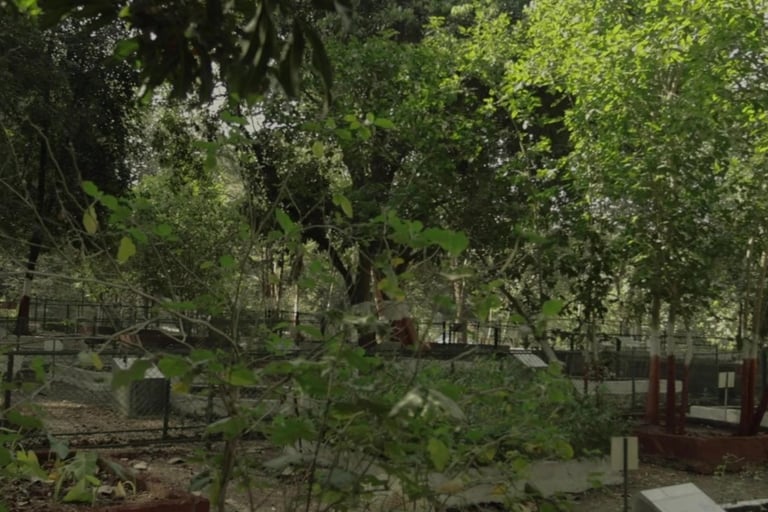
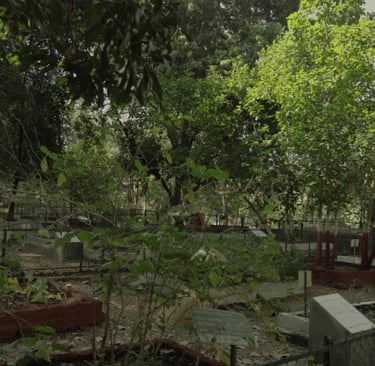
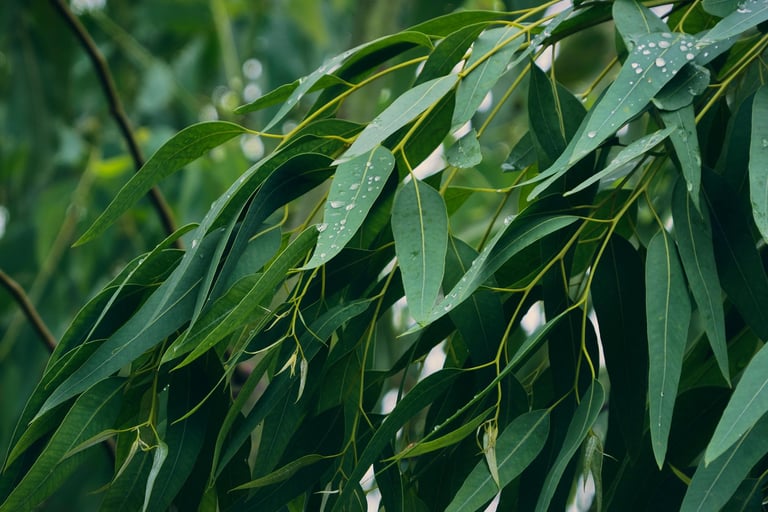
On the north of the medicinal plot, there lies two rows of Nilgiri trees. These trees are native to Australia and were gifted by the Tipu sultan by their French allies in 1790. These trees are cultivated for their leaves. It is used as an aboriginal remedy for infection and fever, it is antiseptic and helpful in colds flu, and sore throats. Though it is highly medicinal, their plantation can cause ecological problems as they absorb a huge amount of water. This prevents the growth of native plants. The plantation can be beneficial to drying up the marshy area. The well-known word, Eucalyptus, has its roots in Latin. Eu means well and calyptus means covered. As its buds in the young stage are well covered with petals and hence, European botanists named it Eucalyptus. Kids often play with its buds like spinning top.
Station 09
Eucalyptus
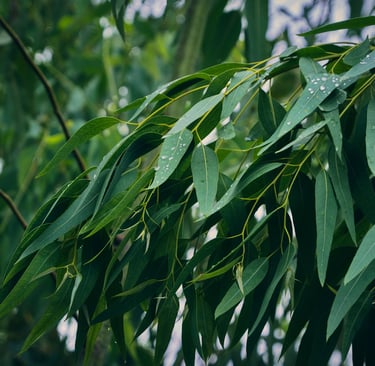
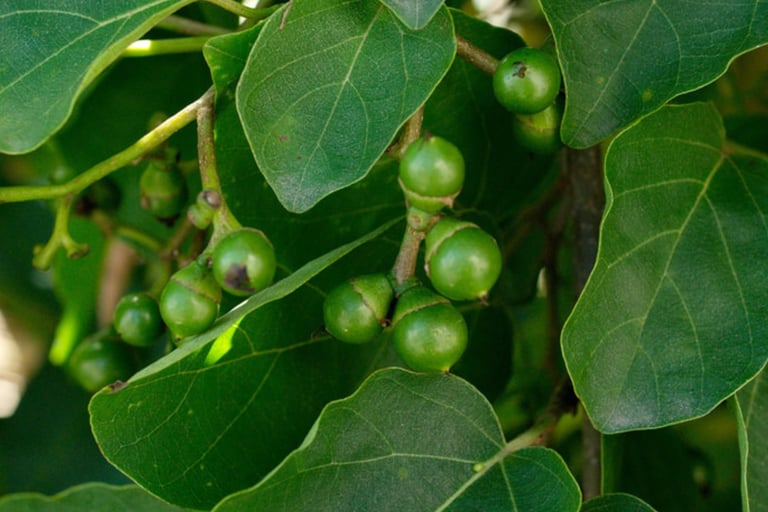
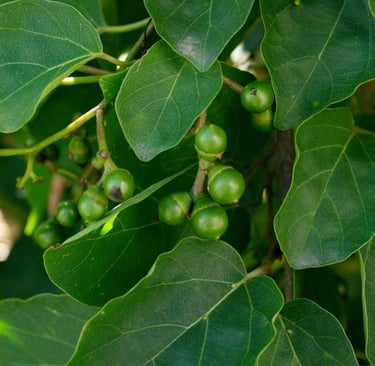
The trees planted here are of Indian cherry or Saucet Berries. In India, it is known as Gundi or Gunda. Why? Pluck a fruit and crush it, and you will come to know. The fruit contains sticky gum which is also used as a glue and is astringent, anthelmintic, diuretic, demulcent, and expectorant. The pulp in the fruit is sweet in taste and translucent. Immature fruits are pickled and leaves are used as a vegetable. The Genus in botanical name, Cordia dichotoma is given after German botanist V. Cordus. and the specific epithet dichotoma refers to its forked branches. This plant flowers in the months of March and April and fruits from April to June.
Station 10
Indian Cherry
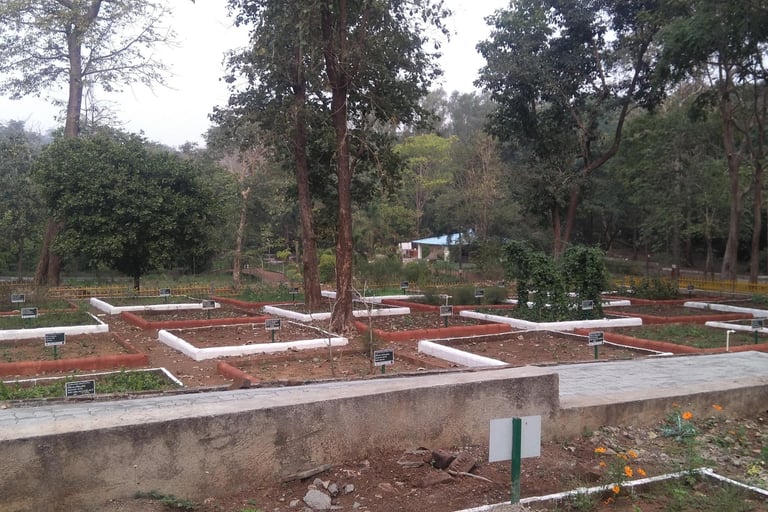
What is rare for you? Why is it rare? And how do you conserve it. Similarly, what are the threats and dangers in front of you and how are you going to deal with them? Just think… This plot in front of you is dedicated to such plants which are Rare, Endangered, and Threatened, RET in short, these words themselves are enough to explain their meaning. With every passing decade, we are losing a few species. We are not able to bring the extinct species back, but there is a ray of hope for RET species. They can be conserved and protected from extinction. Opposite to RET plot, another plot dedicated to medicinal plants, Divided into Herbs, Shrubs, and Tree is Arogyawan. The information about the plants planted in these is given on the board. You are requested to visit this plot.
Station 11
R.E.T. Plot and Arogyawan
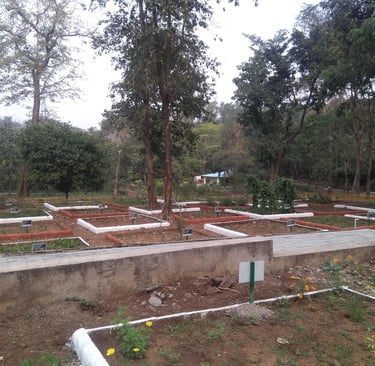
The trees planted along this road is Easter tree. Because of the Jav, that is, Barely shaped seeds it is known as Indrajao in India. The tree has its origin in Tropical Africa as well as the Indian subcontinent. Holarrhena pubescence is its botanical name. The generic name Holarrhena is derived from two Greek words Holos meaning the whole and arrhen meaning a man. This plant is used in chronic diarrhea and the bark is useful in the treatment of piles and other digestion-related problems, hence, has the botanical synonym holarrhena antidysentrica. To cure skin diseases, the bark is mostly mixed in Cow urine and applied to the affected parts. Similarly, the bark powder is given with cow milk to cure urinary troubles.
Station 12
Tilicherry Tree
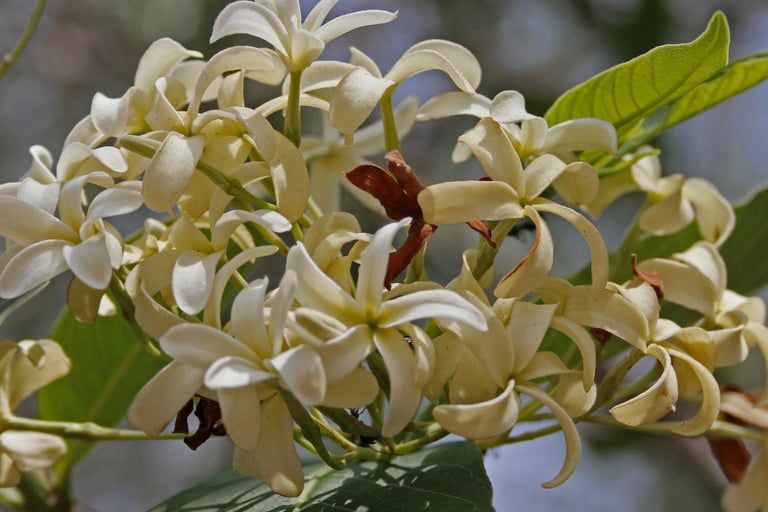
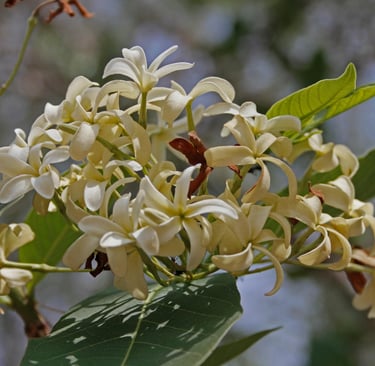
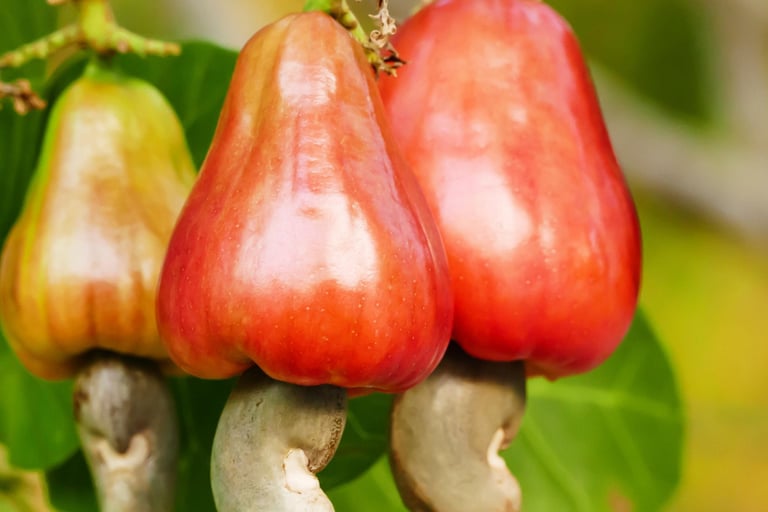
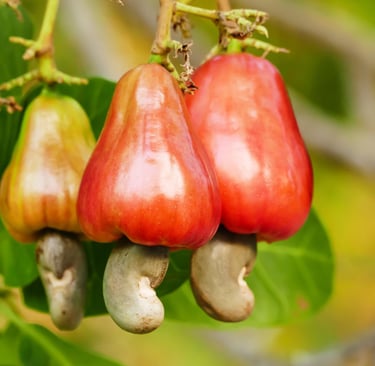
Have you ever plucked a Cashew nut from the tree? If yes, then you might be knowing how to eat it. If not, here I am. You cannot eat Cashew Nut directly. It contains toxic chemicals so they either steam or boil before consumption. Originating from Tropical America, it is introduced in India by Portuguese traders in the 16th century, since then, this nut can be seen in almost every sweet dish as a condiment. It is the most essential element in dry fruits. This plant belongs to the family of Mango, Anacardiaceae. Botanists have observed that most members of the family contain the smell of unripened mango in their leaves.
Station 13
Cashew Nut
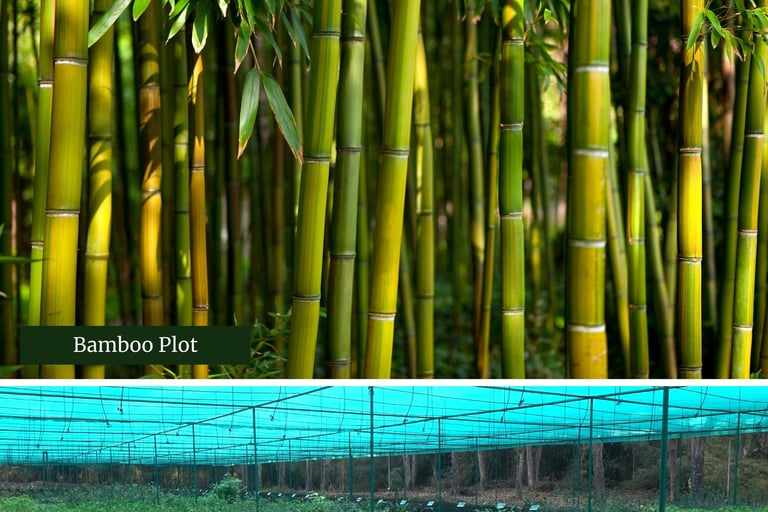
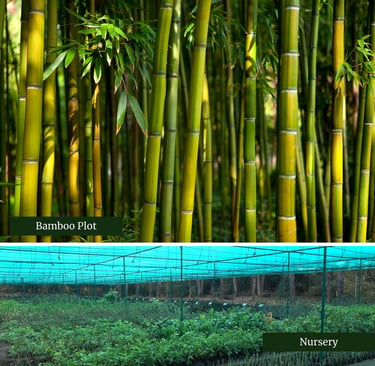
If I ask you, which plant you consume often, or simply, what is your staple food, then what your answer would likely be? Well, it must be Wheat, Rice, Bajra, or Jawar. All these plants belong to the grass family. It is one of the largest plant families having more than ten thousand species all over the world. Bamboo belongs to the same. In Waghai Botanical Garden, more than 45 bamboo species are introduced along with the native bamboo. They have played a vital role in settling human beings with their basic needs. Flowering period of bamboo varies species to species from 10-30 years. After producing seeds, the plant dies. Dangi people prepare pickles and chutneys, and even use them as vegetables. Kotwadiya is the only primitive tribe in South Gujarat who are conserving the traditional bamboo culture. They make artifacts and toys. These all products are available at the souvenir shop.
The back side of the botanical garden houses a nursery section for the propagation of Rare, Endangered, and threatened plants under a controlled environment. Visitors can purchase these plants from the garden shop.
Station 14
Bamboo Plot and Nursery
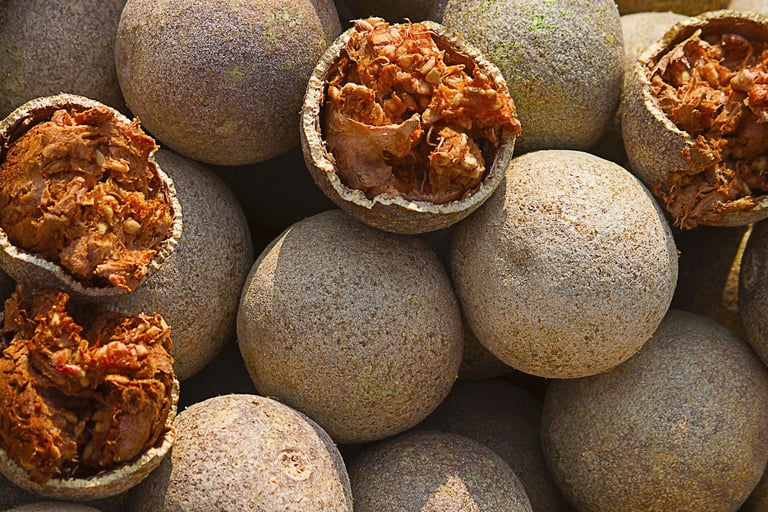
Now, the most interesting part of the tour is here. Pluck a leaf from this plant. Crush it a little bit. smell it and taste it. what it smells and taste like? Is it one that you often use right after your meal? Can you name it? The plants in front of you are Wood Apple. This plant is indigenous to South India. The tree is famous for its pulpy hard rounded fruit. It controls bleeding and contains Calcium, Phosphorus, iron, and vitamin C. The plant belongs to the lemon family which is rich in citric, oxalic, malic, and tannic acid. However, the smell of leaves is like of fennel. But fennel belongs to the cumin family and they are far away from each other. So then, why do the Wood Apple leaves smell and taste like fennel? Is it something common between them? We recommend you to explore it yourself, and let us know
Station 15
Wood Apple
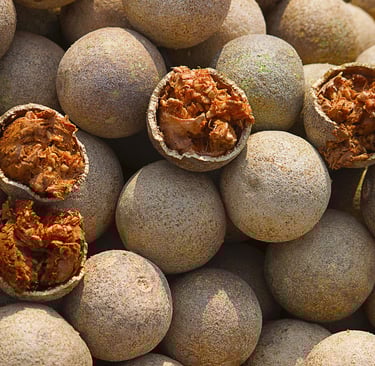
The Bullet wood tree is a lovely green small tree indigenous to the Indian subcontinent. With the charming appearance of its pyramidal crown of dense, dark green glossy foliage and star-shaped intensely scented flowers, it is a praised ornamental species. The Botanical name of the tree, Mimusops elengi is derived from the Greek word Mimo and opsis meaning an ape-like appearance as its resemblance of the flower to the face of an ape. And Elengi is its vernacular name in Malayalam. It is one of our strongest wood and also known as Maulsari, which is mentioned in our epics Ramayana and Mahabharata. It is also found mentioned in the popular play Shakuntala by Kalidasa among the other beautiful flowering plants.
Station 16
Bullet Wood Tree
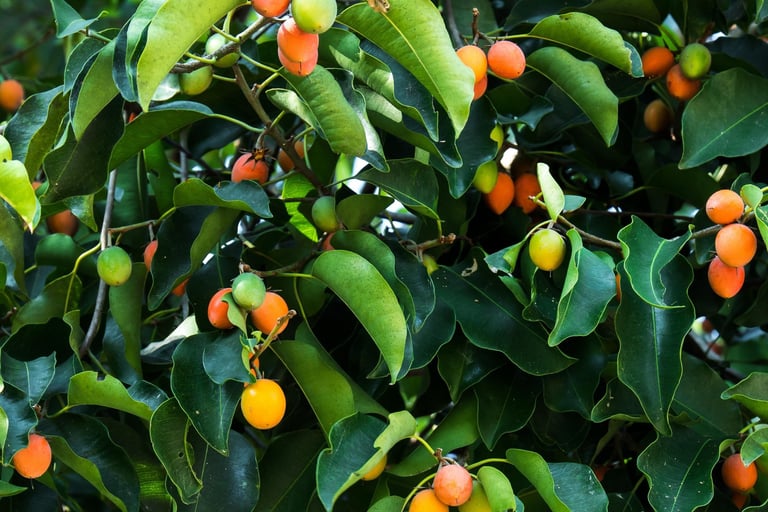
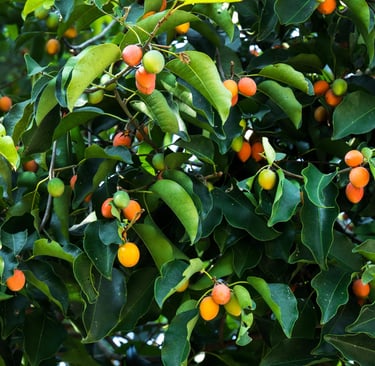
Do you know the part of a plant that grows under the soil? Yes, they are roots. when underground stem tissues start to store the food material and they are known as tubers. Beat, Sweet potato are some examples of this. The plot in front of you is of Tubers, which has several tuberous plants.
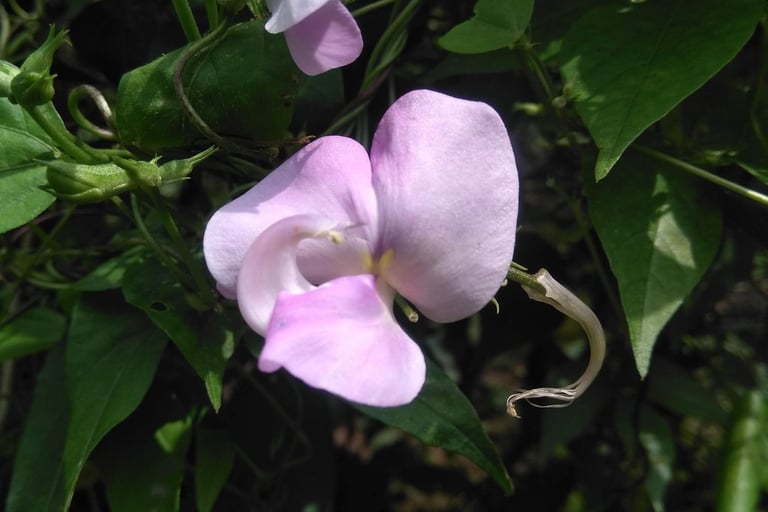
Halund is among them.A few decades ago, the tuber of this plant was in day-to-day use by the Dangi people. Due to medical advancements, after generations, the use of this plant gradually dissolved with time. It was a wholesome source of food with all nutrients. The leaves are cooked as vegetables and the seeds as dal. The roots are helpful for women’s fertility. When the local plant experts Lasu and Kasu brothers shared this information with Professor Nagar from Botany Department M S University; the Forest division and his team were successful to conserve this plant in its local habitat. They spread awareness among local people and bring this tuber in everyday use.
Station 17
Tuber Plot
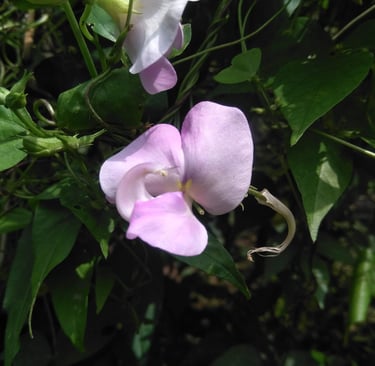
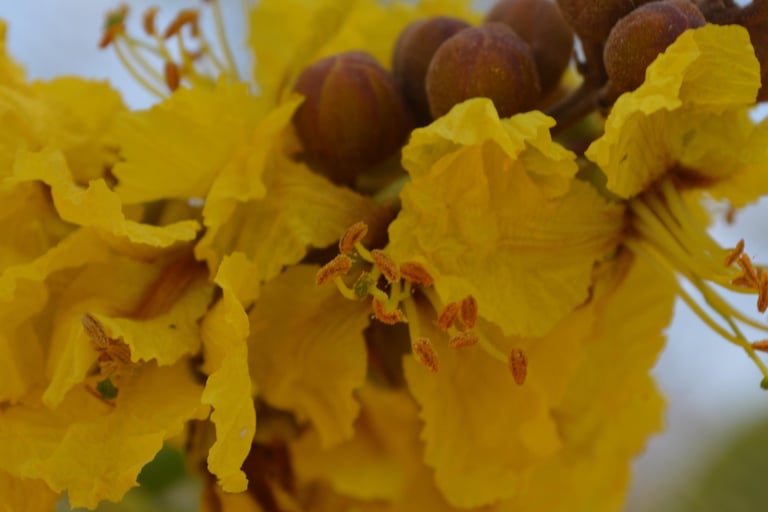
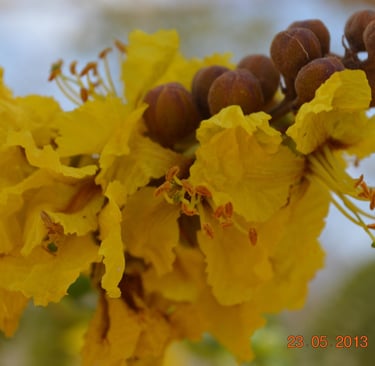
Taking an exit from the tuber plot, you will see the partially deciduous big tree with grey bark, and handsome foliage, reaching up to 60-70 feet in height. This tree is often found in our cities and roadside. It bears a yellow flower from May to August. Due to the rusty, old copper-like, pod the tree is known as Copper-Pod. And hence known as Tamrafali in India. Originated from Shri Lanka, Andamans, Malaya, and North Australia. In the botanical name, Peltophorum pterocarpum, the genus peltophorum in Greek means the shield bearer, as the fruit is like a long shield similar to those of Zulus people. And pterocarpum refers to its winged seeds.
Station 18
Copper Pod Tree
Fruits!
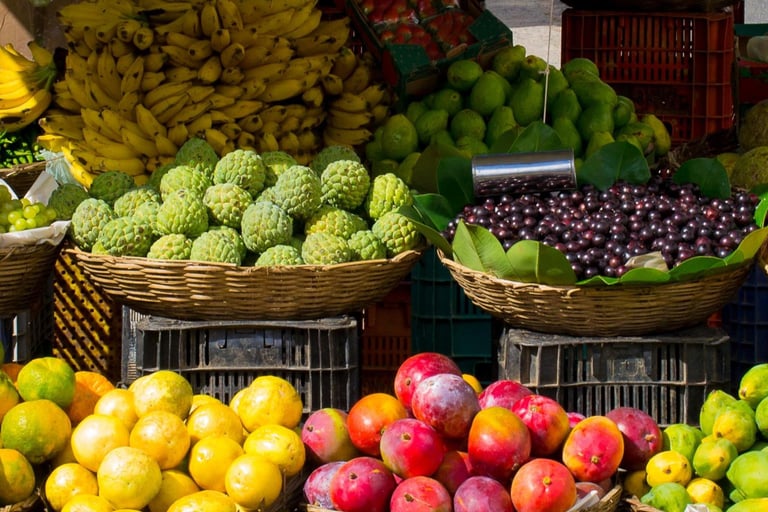
When we hear this name a picture of a basket having, Bananas, apples, Pine apples, and Grapes on the table comes to our mind, as we used to draw in our school days. But do you know what actually a fruit is? They come after the flowering, as a result of the ripening of the ovary. From the prehistoric era, crop plants have been our greatest heritage. During the late Neolithic and Bronze ages, around 6000 to 3000 before Christ, Mediterranean fruits like Date, Olive, Grape, Fig, and pomegranate were domesticated by humans. Fruits like Citrus, Banana. Pome fruits like Apple and Pears; and stone fruits like Almond, Apricot, Cherry, Peach, and plums were domesticated in Central and East Asia. The fruits and nuts like blueberry, blackberry, pecan, and kiwi are domesticated recently. The fruit plot in front of you will give a glimpse of all of these plants.
Station 19
Fruit Plot
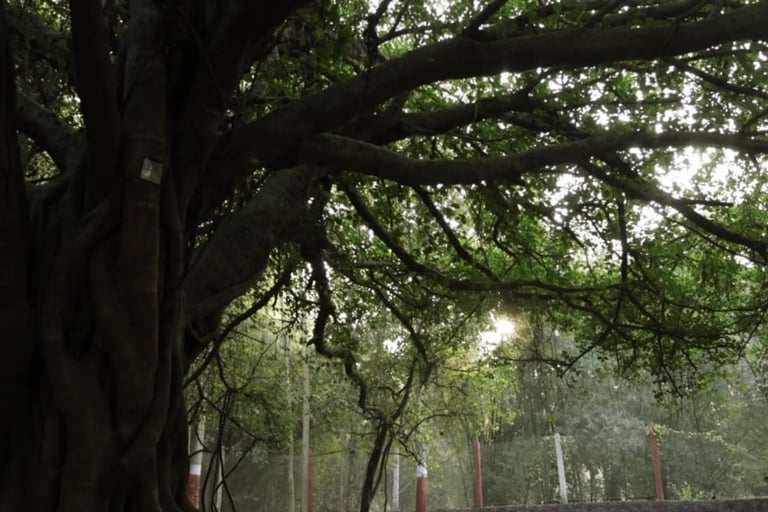
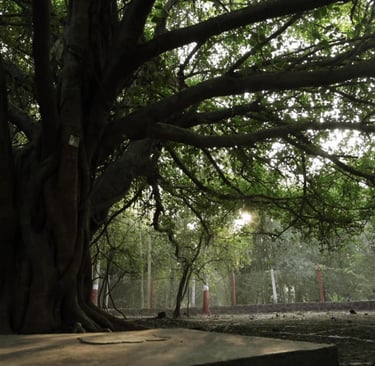
The glory of this tree cannot be explained in words but can be experienced. You hardly have come across such a massive, magnificent, and marvelous ficus tree in your life. This 150-year-old tree is the only tree in Gujarat which is growing at an altitude lesser than its actual habitat of 1200 meters. This is Pragwad. It is more than 150 years old. It is said that When Lord Brahma gave the Brahmagyan; The vibes were absorbed by the canopy and via prop roots, they percolated in the Earth. And hence, it was always been a favorite of the sages of India. Apart from spiritual significance, Pragwad has the potential to cure liver disorders, ulcers, and leprosy. To experience the glory of Pragwad. We recommend you sit underneath it and feel the energy that this tree is radiating through its branches. you can hug any branch of your desire and can experience how hugging trees can relieve your stress. It is said that many sages meditated under this species for enlightenment. We recommend you spend some time in silence with this tree and observe the radiance of this tree in you.
Station 20
Pragwad
We hope that you enjoyed this audio tour of Waghai Botanical Garden. In this route, we talked about the plants and plots of WBG South. You might have wondered that the garden which is spread across 24 hectares has only this many interesting plants…. Actually not. The garden harbors more than 1000 plant species. I know you have visited the garden for a shorter time. We tried to give you a glimpse of the garden in the possible minimal time. If you stay here for some more time, we can take you on another journey of Medicinal plants and Plants of North WBG. There you will meet to plants that have been an integral part of Indian medicines. Along with that, there are orchids that can grab your interest, in the world of desert plants and cacti. The Dang plot will fascinate you with the dense and tallest trees. You will meet the exclusive members of WBG. And the historical collections of the garden. To know more about other tours please visit the office.
South Dang Forest Division Thanks you for Visiting Waghai Botanical Garden.
Jai Hind, Jai Bharat.
Station 21
Endnote

Get in touch...
© 2026 Krishnparn.in All Rights Reserved
All content (including but not limited to text/words, photographs, videos and audios) on this site is the original work of Krishna Singh Rajput and CANNOT be used/copied without prior written permission and giving due credits. Anyone caught copying content from any page on this site (whether in part or whole) shall face severe repercussions.